
AI Is Changing Search. Here's What Actually Matters for Your Website (Straight from Google)
Share article
If you've spent any time online lately, you've probably noticed Google looks different. AI Overviews summarize answers at the top of the page. AI Mode lets people chat their way to results. And every other marketing email in your inbox is screaming about "AEO" or "GEO" — new acronyms promising to crack the code on AI search.
It's enough to make any business owner nervous.
Is my website still going to show up? Do I need to rewrite everything? Do I need some new technical wizardry just to keep up?
Good news: Google just published its official guide on optimizing for generative AI search — and the answer is far simpler than the panic suggests. We've read the whole thing so you don't have to, and pulled out exactly what it means for your website.
The Big Headline: SEO Isn't Dead. It's the Foundation.
Google's clearest message in the entire guide is this: the SEO best practices you already know still work. Generative AI features like AI Overviews and AI Mode are built on top of Google's existing search ranking systems — not separate from them. When AI generates an answer, it's pulling from the same index of pages it always has, using a process called retrieval-augmented generation (a fancy way of saying "the AI looks up real web pages to ground its answer").
In plain terms: if your site is set up to rank well in regular Google Search, you're already optimizing for AI search.
So when you see people pushing "Answer Engine Optimization" or "Generative Engine Optimization" as some brand new discipline — Google is essentially saying:
it's still just SEO.

What Actually Matters: The 3 Things to Focus On
Here's where Google's guidance gets actionable. Three priorities matter most.
1. Create Content Only You Could Write
This is the single biggest factor Google calls out. AI systems can spot — and skip past — content that's just regurgitated common knowledge. What wins is what Google calls "non-commodity content."
The example Google uses is perfect: a generic "7 Tips for First-Time Homebuyers" post is commodity content. Anyone could write it. AI doesn't need to send users to your version of it because there are a thousand identical ones.
But a piece titled
"Why We Waived the Inspection & Saved Money: A Look Inside the Sewer Line" — that's non-commodity. It has a point of view, lived experience, and information you can't get anywhere else.
What to do:
- Share first-hand experience, case studies, and behind-the-scenes insights
- Add a clear point of view — your opinion, your process, your data
- Use real examples from your business or customers (with permission)
- Support your writing with original photos and videos when it fits
- Stop publishing thin posts just to "hit a keyword"

2. Keep Your Technical House in Order
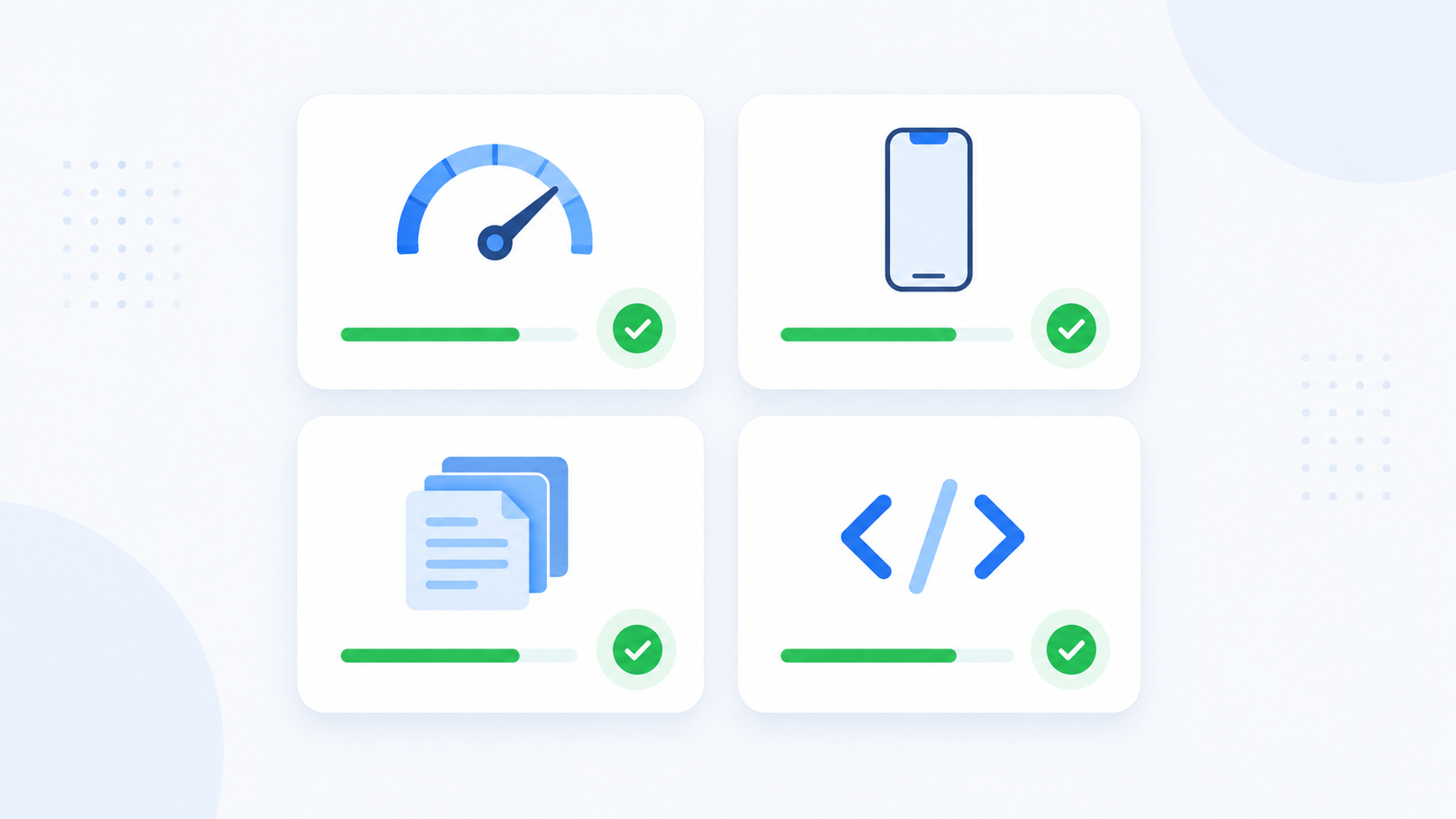
For Google's AI to use your content, it first has to be able to find, crawl, and index your pages. None of this is new — it's just newly important.
The technical essentials:
- Pages must be indexable and eligible for snippets in regular Google Search
- Your site needs to load fast and work well on mobile
- Content shouldn't be hidden behind broken JavaScript or blocked from crawlers
- Duplicate pages should be cleaned up
- You should be verified in Google Search Console so you can actually see what's happening
The good news if your site is built on Duda (like ours are): a lot of this is handled automatically. Duda auto-generates your sitemap, robots.txt, canonical tags, and schema markup, supports IndexNow (which pings search engines instantly when you publish a change), uses server-side rendering so bots can read your content cleanly, and consistently scores at the top of the industry on Core Web Vitals. It even generates an llms.txt file for AI crawlers — and while Google says that file isn't required for
their AI, it doesn't hurt for the rest of the AI ecosystem out there.
Translation: the technical foundation is mostly built-in. You can focus on the content.
3. Claim Your Local & Product Listings
If you're a local business or you sell products, Google's AI features can surface you directly — but only if your business profile and product data are set up.
What to do:
- Claim and fully fill out your Google Business Profile (hours, photos, services, reviews)
- For ecommerce, make sure product data is fed to Merchant Center
- Encourage authentic customer reviews — not fake ones, which can backfire

What You Can Stop Worrying About
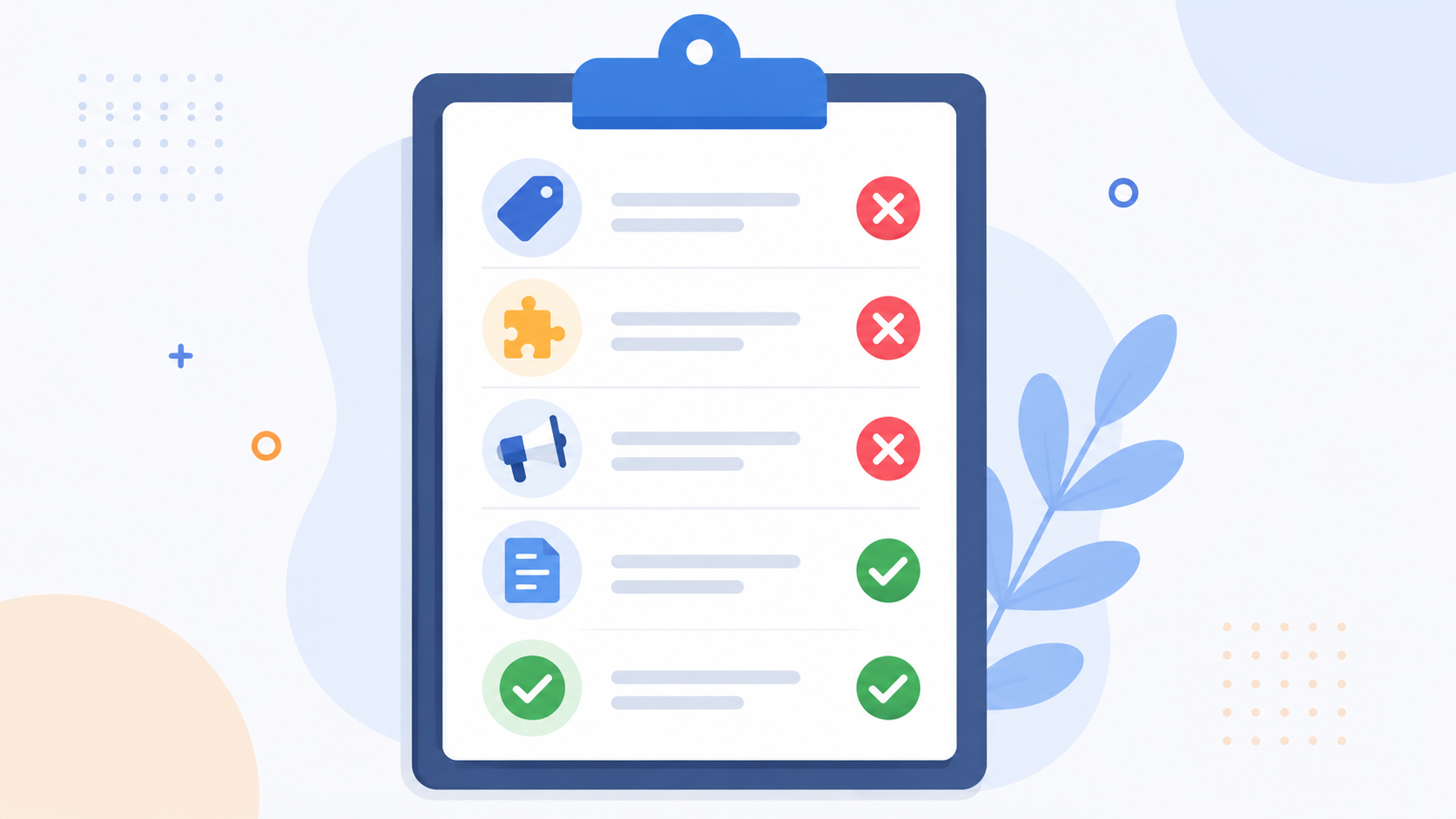
This part of Google's guide is honestly a relief. A lot of the "AI SEO hacks" floating around online are, in Google's words, things you can ignore. Specifically:
- llms.txt files and special AI markup — not required for Google Search
- "Chunking" your content into tiny AI-friendly pieces — not necessary
- Rewriting everything in a special "AI-readable" voice — Google's systems understand synonyms and natural language just fine
- Chasing inauthentic "mentions" across the web — this can actually hurt you, not help
- Going overboard with structured data — useful for rich results, but not a magic AI ranking lever
If a vendor is pitching you a service built around any of these, ask hard questions before you spend money.
A Quick Look Ahead: AI Agents
Google's guide ends with a note on what's coming next: AI agents — autonomous tools that browse websites and take actions on behalf of users (booking, comparing, even purchasing). It's still early, but emerging standards like the Universal Commerce Protocol point to a future where your site doesn't just need to rank — it needs to be readable by software acting on a user's behalf.
The takeaway isn't to panic-redesign anything. It's to make sure your site is clearly structured, fast, and accessible. The same things that make your site good for humans make it usable by agents.

The Bottom Line
Strip away the hype, and Google's guidance comes down to four words: build something genuinely useful.
Write content only you could write. Keep the technical foundation clean. Show up properly in local and product listings. Ignore the gimmicks. That's the entire playbook for AI search — and it happens to be the same playbook for ranking well in regular Google Search, building customer trust, and getting people to actually buy from you.
The businesses that win in AI search aren't the ones gaming a new system. They're the ones who were already doing the right things — and who keep doing them as the search experience evolves.
Need a Hand With This?
At The Stack Group, AI search optimization isn't a separate service we tack on — it's baked into how we build every site. We build on Duda, which means our clients start with the technical foundation already covered: auto-generated sitemaps, schema markup, IndexNow, server-side rendering, and industry-leading Core Web Vital scores out of the box.
On top of that, we layer the human side: competitor research powered by tools like Semrush, AI-assisted analysis (we use Claude to help us go deeper, faster), and human SEO oversight on every recommendation before it ships. No autopilot. No gimmicks. Just the SEO fundamentals Google itself is telling you matter — done well, consistently, by people who pay attention.
If you'd like a second set of eyes on your site's readiness for the AI search era,
get in touch with us at thestackgrp.com. We'll take a look and give you honest, actionable feedback.
Questions? Have a project you're ready to launch?
Simply text our team at
(857) 256-1295 or send us a message!
Latest Articles